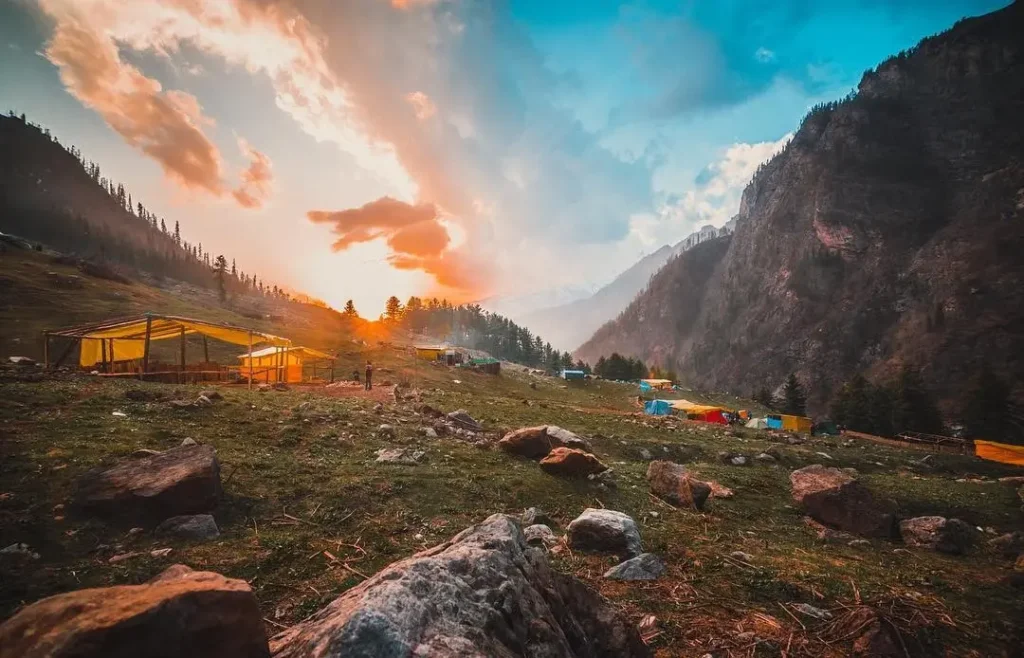
The best time to visit Kheerganga is from April to June summer months and September to November post monsoon autumn months. Weather during these months remains pleasant and ideal for trekking with lush green landscapes and clear skies. Temperature generally ranges from 10°C to 25°C during summer months (April-June) and this is the peak season for Kheerganga trekking.
During the monsoon months (July to Early September) we recommend avoiding Kheerganga trek as the trail gets slippery and there is a risk of landslides. If you still want to experience the monsoon magic of Kheerganga then we recommend going with a reliable trek operator like us “Kheerganga Trekking Adventures”.
December to February are winter months and snowfall makes trail difficult. It is ideal for experienced trekkers who want to enjoy a small snowy Himalayan trekking adventure on weekends. However we don’t recommend this to first time trekkers and still if you want to experience it during the winter as a first time trekker then always go with mountaineering certified guides and local operators who can take care of all safety requirements.
Kheerganga Trek Quick Snapshot:- Best Months at A Glance
Here’s the month‑wise feel of the trek:
| Month | How it feels on the trail | Good time? |
| Jan–Feb | Snow, freezing nights, route can be blocked. | Only for experienced snow‑ready trekkers |
| March | The end of Winter, cold but pleasant days, less crowded. | Very good |
| April | Pleasant climate, trail fully open, stable weather, slightly less busy trail | Excellent |
| May–June | Peak summer season, clear skies, warm days, and busy camps | Excellent |
| July–Aug | Monsoon, road disruptions, muddy trails, road blockage issues. | Better to avoid |
| Sept | Post‑monsoon green landscapes, clear skies, fresh views, pleasant weather | Excellent |
| Oct | Clean air, golden forest, scenic trail and views, moderately crowded | Excellent |
| Nov | Nights are colder, less crowded | Good if you can handle cold |
| Dec | Full winter starts, freezing nights, snow likely at top | Only for seasoned hikers with winter prep |
How Kheerganga weather is different from Kasol
Kheerganga altitude is 2,900 metres above the sea level, due to this its weather is different from Kasol and Bhuntar.
- Summer (March–June) is considered the most comfortable period for Kheerganga, with day temperatures ranging between 10–22°C and trails are clear and dry.
- Monsoon (July–September) brings heavy rainfall, gushing streams, uneven trekking trails and frequently blocked routes on the Bhuntar–Kasol–Barshaini road.
- Late autumn and winter (November–February) receives frequent snowfall and sub‑zero temperatures at nights, especially at our Kheerganga campsite and Kheerganga summit.
Spring (March–April): new start after winter
During the spring season Parvathi Valley opens up after months of cold and snowfall.
- From March onwards, old snow starts melting, Kheerganga trekking trails open up, and temperatures become trek-friendly while nights are still cold.
- By April, the trail is generally snow‑free, daytime temperature is pleasant and less crowded as compared to peak summer months.
Why is spring a good time for Kheerganga trek?
- Spring time is best for beginners who want good weather without peak‑season crowded trails.
- Good for those who like fresh cool air, clear light and a less crowded campsite.
Note: During spring evenings are still cold, so you need good clothing layers even in April.
Summer (May–June): Ideal time Kheerganga trek
Summer is the busiest and the most popular trekking period to experience the Kheerganga meadows and natural hot springs.
- Most of our guides, trek leaders and customer testimonials say May-June months are the best for Kheerganga, as the trail is dry, long daylight, and pleasant weather.
- Daytime temperatures during this time remain ideal for hiking, while nights at the campsites are cold but manageable with basic warm clothing.
What makes May–June popular for Kheerganga hike?
- Almost all local cafes, homestays, and camps that are on the Kheerganga trail remain open. The trekking trail is lively with backpackers and our campsites are full of travellers from different parts of the world. Good for people who want to meet new people, experience local life and make new friends.
- There is a lower chance of weather-related disruptions that lead to trek cancellation as compared to monsoon and winter months.
Note: This is peak tourist season for Kasol and Parvati Valley, so expect crowded trails, higher prices, and packed campsites. We always recommend planning your Kheeragaga trek from Delhi in advance during this season as you might find it difficult to get confirmed tents at the last minute. We have a partnership with a lot of good campsites at the top so you can call us and get confirmation in advance.
Monsoon (July–August): lush green but slight risky
On Insta reels, Kheerganga in monsoon looks dreamy, cloudy, waterfalls in full flow, dark green hills. But on the ground in reality, it can turn into a story of landslides and road blocks if you are unlucky with the weather.
- July & August bring heavy rainfall in the Parvati Valley, with some challenging sections, muddy roads, and swollen streams on the trail.
- Road blocks between Bhuntar, Kasol, and Barshaini are common during monsoon, and buses or taxis may be stuck for hours or days.
Some of our seasoned trekkers groups still prefer monsoon for trekking but we share with them a checklist of necessary rain gear and how to be monsoon ready on Kheerganga trail. Our monsoon expert local guides lead these groups and we asked trekkers to keep dates flexible in case the trek gets delayed a couple of days due to road disruptions. We suggest you contact us to get the update of the weather and trekking trail beforehand as our team of local experts always keep a close watch on weather and rain forecast.
If your dates are fixed and you have to return to work on Monday, monsoon is not the recommended season to go for a trek to Kheerganga.
Post‑monsoon autumn (September–November): clear weather and scenic trail
Once monsoon months are over, the Parvati valley looks fresh and full of greenery.
- Our multiple trek guides rate September-November as one of the most rewarding months for Kheerganga trekking, due to good weather and green landscapes.
- September gives you lush greenery and mild temperatures, while October adds golden tree cover and cold mountain air.
Why is autumn special for Kheerganga trails?
- It is an ideal time for photography lovers, perfect for star‑gazing and fun time at campsites.
- Crowds remain less compared to peak May-June summer months, especially on weekdays.
Note: By November, nights turn colder and there is always a slight chance of early snowfall on higher stretches, so we recommend packing warmer layers.
Winter (December–February): snow trek experience
During winter Kheerganga transforms into a snow trek, not a casual “weekend trekking adventure”.
- From December onwards, snowfall is common, and our campsites at the top and upper Kheerganga trail often cover under a layer of snow.
- Temperatures generally drop below zero at night, and due to ice and snowfall some parts of the trek are slow and tricky.
For whom winter is a good time for Kheerganga trek?
- If you want to experience snow and are comfortable walking on snow-filled trails, then it’s the recommended time to experience a small snow trek in the Himalayas. But we always recommend you always take an experienced guide and travel in a group. All our guides are Indian Mountaineering Foundation certified and have years of experience in leading snow treks in the Himalayas.
Not good time if:
- This is your first Himalayan trek, you do not own good winter gear, or you have no extra buffer day in case the trail or road closes.
Many of our trek leaders and our “Experienced Trekkers Community” suggest doing Kheerganga once in a summer season, then come back for a snow trek after you understand the route and know your own fitness level. If you want, you can join our community of experienced trekkers who can guide you further on winter Himalayan snow treks.
Best time by type of trekker
The best time for Kheerganga trek is different for all the trekkers even for the same trail as it depends on experience plus type of experience they are looking for.
- First‑time Trekkers: April to June and late September to mid‑October is ideal for new Himalayan hikers, when the Kheerganga trail is stable and the hike is easy with good weather.
- For Families: April–May and late September–October when temperature is soothing and all the campsites are open with the option to choose from family friendly camps, food, and basic medical support is available in the valley.
- For Backpackers: Late March–early April and late October–November, when you get decent weather but less crowd and best chances of getting cheaper and budget friendly deals.
- For Photographers: September–October for clean post‑monsoon skies, stargazing opportunities, and bright colours in the forest for insta worthy photos and reels to flaunt on social media.
- For Snow lovers: Late December–January but always with a local guide, good winter clothing, and flexible dates for weather or road related issues.
Best time for a Kheerganga trip from Delhi
For most trekkers, a Kheerganga trek package from Delhi means: overnight bus to Bhuntar, local cab or bus to Barshaini via Kasol, then the 10–12 km walk to Kheerganga.
Season matters a lot when you’re coming from Delhi on limited days:
- In March–June and September–November, buses generally run as per schedule, roads are open, and you can finish Delhi–Kheerganga–Delhi comfortably in 3N/4D package.
- In July–August, a single landslide between Bhuntar and Barshaini can delay you by hours or cancel the trek, which is risky if you need to be back in office after the weekend.
Practical ideas for a best time for Kheerganga hike from Delhi:
- Choose a bus that reaches Bhuntar early in the morning, so you can reach Barshaini by mid‑morning and start trekking without rushing. We recommend joining our group tours from Delhi so that you don’t need to worry about logistics and schedule. Our expert team of trip leaders and managers take care of all the hustle from stays, meals, and transport.
- In shoulder seasons and winter, we recommend keeping one buffer day in your plan in case of snow or temporary road closure.
Season‑wise Kheerganga Packing List basics
We help you in building a full Kheerganga Packing List according to the season, but the core packing list changes with the season. Our trek and travel guides suggest a few non‑negotiables below:
Spring and autumn (March–April, September–October):
- Trekking shoes with decent grip (trail can be uneven and rocky).
- Light fleece or sweatshirt, plus one warm jacket for evenings at the top.
- Beanie, light gloves, and a rain‑proof windcheater in case of passing showers.
Summer (May–June):
- Breathable trekking shoes or trail runners, sports socks.
- Light clothing for day, one warm layer for night, cap, sunglasses, and sunscreen – sun is strong even when air feels cool.
Winter (December–February):
- High‑ankle shoes or boots with good grip for snow and ice, plus warm woollen socks.
- Thermals, heavy fleece, insulated jacket, and rain shell; proper gloves and warm headwear.
- Headlamp, extra batteries, and if possible microspikes or gaiters for snow sections. If not then you can always contact us and we can help you with all the winter trekking gears.
For all the seasons we recommend:
- Small first‑aid kit, basic medicines, power bank, rain cover for bag, water bottle, and light snacks. A season‑aware Kheerganga Packing List makes your trek safer and more comfortable than any “Instagram outfit”.
How season changes Kheerganga Trek Cost
Kheerganga trekking packages cost is not just about operator price or hotel category; the month you pick will change almost every line of item.
How cost goes up or down with season:
- Transport: Bus fares and on‑ground taxi costs are generally higher in April-June month and during long weekend holidays because demand spikes for Kasol and areas around including Kheerganga.
- Stay and camping: In May and June, camps and guest houses near Barshaini and on the Kheerganga trail fill up fast and they charge peak‑season rates. In non busy months like March, late October, and November, you can generally negotiate the prices better.
- Gear: For winter dates, you either pay more to rent or buy jackets, gloves, and snow‑friendly shoes, or you book a costlier package that includes winter gear and support. We suggest checking with our team before so that we can guide you and give you best deals along with winter gear rentals.
- Hidden costs: In monsoon, extra buffer days, diversions, or sudden hotel changes due to blocked routes can make a “cheap” plan more expensive than a clean‑season trek. This cost is not under control of anyone including us who have been operating Kheerganga trek for years.
FAQs on best time to visit Kheerganga
Which is the single best month for Kheerganga?
Most travellers and our guides say May and October are ideal for Kheerganga trek because of pleasant weather, open trail, and picturesque views, without winter challenges or heavy monsoon risk.
Is Kheerganga open all year?
Yes, the Kheerganga trail remains open all year round except for some monsoon and winter days. July-August (monsoon) and parts of peak winter can see trail closures, cancelled group departures, or governmental advisories against trekking due to landslides, floods and heavy snowfall
Is monsoon a good time for a Kheerganga trip?
Monsoon is a beautiful time but risky due to landslides, wet trails, and possible road blocks are common, so we do not recommend it for most people and advice to consult our team of experts who will plan a perfect monsoon Kheerganga trekking adventure for you.
Can a beginner do Kheerganga in winter?
Yes he can, but only with an expert local guide, proper winter gear, and a flexible plan. We suggest to most first‑timer trekkers, it is much better to go in spring, early summer, or autumn.
What is the best time for a budget‑friendly Kheerganga tour?
For a budget friendly Kheerganga trek we recommend late March to early April and late October – November due to decent weather, fewer crowds, and cheaper rates of buses and stays, so that you can complete your trek in a backpacking budget.
